
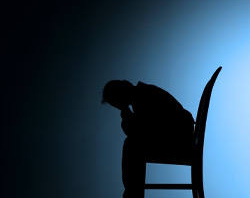
Anxiety – Its Causes And Cures

Even though many people tend to use the words “stress” and “anxiety” interchangeably, they are in fact two distinct conditions. Stress is a reaction to a stimulus, either external or internal. You may experience stress because you feel frustrated with something (like waiting in line behind a slow person) or when you are worried that you will not meet expectations (such as missing a deadline).

Anxiety, on the other hand, is a sense of fear and nervousness or even dread. It can be brought on by negative thoughts and expectations, or as a response to stress. You may experience feelings of anxiety all of the time and not know why, or your worry may be a response to something you are nervous about, like an upcoming test.

Abnormal levels of certain neurotransmitters in the brain can cause generalized anxiety. Some research shows that anxiety can be hereditary. Anxiety can also be induced environmentally, as when a child whose father or mother is often anxious learns to be an anxious person by observing the parent. But very often the base cause of anxiety is simply the thoughts in a person’s mind!

Stress and anxiety are subjective conditions. Different people may experience stress during different situations, and different people may respond to their anxiousness in extremely different ways. Symptoms of anxiety can range from the mild, such as tense muscles and sweaty hands, to the severe, such as anxiety attacks, vomiting, and irregular heartbeat.

Everyone experiences feelings of anxiety from time to time. We have all felt the dry mouth and “butterflies in the stomach” before a public speaking engagement or an exam. But when does it become harmful to your health? Studies have revealed that chronic anxiety can make us vulnerable to sleep disorders, high blood pressure, depression, and relationship problems

For sufferers of long-term untreated anxiety, there can be negative health consequences that have yet to be explored fully. Some studies have found a link between generalized anxiety disorder and a variety of serious health conditions including heart disease, respiratory illness, cancer, thyroid disease, and arthritis. Chronically anxious people may even be more likely to suffer a fatal heart attack.

If you experience what seems like an overwhelmingly high amount of anxiety relative to the situation, or if you feel anxious nearly every day, you may actually have an anxiety disorder. Anxiety disorders are chronic conditions characterized by one’s inability to function normally because of constant anxiety. Anxiety disorders are serious conditions that should be treated to lower the risk of long-term negative health effects.

Anxiety treatment has long been the subject of much debate in the medical field. Some medical professionals believe that medication is the best way to treat chronic anxiety. However, anxiety medications often have undesirable side effects that are just as bad or even worse than the initial condition.

There are many safe and non-invasive ways to control negative emotional reactions. Exercise is a frequently overlooked option, but it is extremely effective. Exercise causes your body to release endorphins, which are natural pain-killing and mood-boosting chemicals. With regular aerobic exercise, you may start to experience a dramatic decrease in negative emotional responses to situations that would previously have made you very anxious.

The most effective way to manage tension and worry is to control it from within. Stress relief and stress management techniques are very valuable tools in handling day to day stress. These techniques can teach you to calm yourself and relieve your tension. You make a conscious effort to slow your breathing, release the tension, and maintain a calm state of mind. Meditation is an excellent form of tension management in which you practice mindful relaxation and deep, calming breathing.

However, if you are searching for a proactive method to free yourself of anxiety, hypnotherapy is by far the most effective form of treatment. When an individual undergoes hypnotherapy, their reactions and emotional responses to events are changed at the core. This provides them with the opportunity to cope with anxiety-inducing triggers without the usual feelings of nervousness and fear.

Hypnosis is typically performed by a licensed hypnotherapist in a series of regular sessions. More commonly today, hypnotherapy takes the form of self hypnosis programs which can be purchased in the form of MP3s, DVDs, or CDs for individual home usage. No special skills are required to practice self hypnosis. All you need is a way to play the hypnotherapy program and a quiet space where you can relax and listen.

Another successful method of anxiety treatment is Neuro-Linguistic Programming, or NLP. NLP is a form of therapy that can help you condition your mind and body to naturally respond to situations in a more positive way. You can consciously decide to be calm instead of feeling anxious, meaning that you always maintain control over your own emotions.

In summary, you can see that it is important to control our negative emotional responses in order to remain healthy. Learning to cope with nervousness and fear can even extend your life. To treat long term anxiety, the best treatment option to follow is to participate in hypnotherapy to change your attitudes and reactions at the core. Then, use stress management techniques as necessary to stay calm in everyday situations.

The author, Alan B. Densky, CH has been in practice over 30 years. His Neuro-VISION self hypnosis website carries a broad range of anxiety elimination NLP CDs, and advanced stress elimination CDs Visit his site for the Free self hypnosis blog, and download a free MP3.

Winter Blues Got You Down?

The holiday season has been here again – and gone. Time to get back to the workaday routine of everyday life and, in much of the U.S., survive the cold weather until spring gets here again. For one in five people, that means the winter blues, also called Seasonal Affective Disorder (SAD).

You don’t have to live in the northern states to be affected by SAD, either. This problem happens because the sun is tilted away from the earth, so we get fewer rays of sunshine during this time of year.

Before you start thinking that it’s all weather-related though, and there is nothing you can do about it, think again. You don’t have to spend the entire winter eating too many carbs, sleeping too much, and exercising too little until the sun shines again. Believe it or not, there is a way to treat SAD – without travelling south of the Equator, and without medications.

Even though the weather causes a tendency to feel “down,” the real reason that many of us get depressed during this time is that we start to think negative thoughts. Once we begin to think these thoughts, we feel a little sad, which often sends us into a vicious cycle of thinking more sad thoughts and becoming even sadder.

The key to breaking free of SAD-related depression is learning to break the cycle of negative thinking. Sure, you can take pills and experience whatever side effects these have on your body, but medicine doesn’t solve the problem. By using Neuro-Linguistic Programming, however, you can solve the problem – yourself!

By using the NLP “Flash” technique, clients learn to become relaxed and focus on pleasant thoughts. When their minds start to think unpleasant thoughts, they learn how to banish these thoughts in a flash and to focus on the positive once again.

Soon, they find themselves almost completely incapable of thinking negative thoughts. Because they can’t think negative thoughts any more, they free themselves from the endless cycle of sinking further and further into depression. Are you ready to join them and enjoy the freedom yourself?

Check out self-hypnosis CDs for Depression.